After a Windstorm: Checking Your Roof and Working With Your Insurer
Start from the ground, take photos before anything moves, and bring in someone who will stand beside you through the claim.
October 8, 2026 · 4 min read
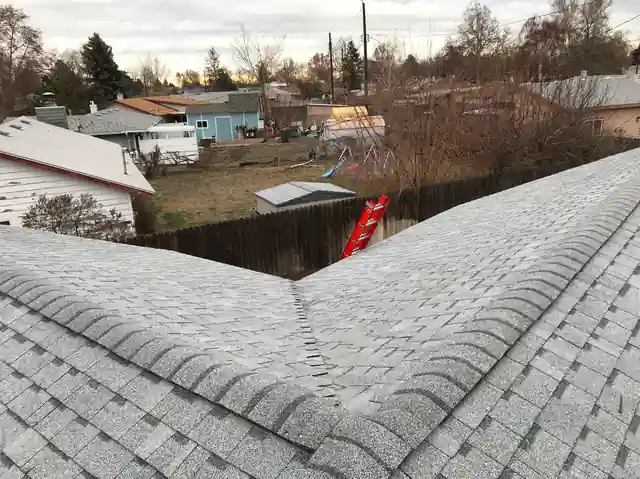
A hard windstorm rolls through the Yakima Valley, the noise dies down, and then the questions start. Is the roof okay? Did anything come loose? Do I call the insurance company first or a roofer first? This guide is general advice for homeowners and building owners. It can't tell you what your policy covers, and no roofer can honestly promise you a claim outcome. What it can do is give you a clear order of operations.
Start from the ground
Don't climb up there after a storm. Wet, windy conditions and loose materials make a fall far more likely than you think. Walk around the house and look up, ideally with binoculars or the zoom on your phone.
- Shingles that are missing, lifted, creased or sitting crooked
- Bare patches where the underlayment or deck shows through
- Metal edges, ridge caps or flashing that have bent or pulled away
- Granules collected in the gutters or at the downspouts
- Debris or branches sitting on the roof
- Fresh stains on ceilings or walls inside, or damp insulation in the attic
Check the attic too, if it's safe to get to. Daylight where you shouldn't see any, or a damp spot on the underside of the decking, tells you something the ground view can't.
Document before anything moves
Take photos and short videos of everything you see, from several angles, with the date on your phone. Photograph inside stains as well as outside damage. Write down when the storm hit and what you noticed first. Keep this before you clean up, because it's the record of what the storm actually did.
If water is getting in, protect the property from more harm. A tarp or a temporary cover is often the right move, and a roofer can place one safely. Check your policy for what it asks of you in that situation, and keep receipts for anything you spend.
Call your insurer, and get estimates
Contact your insurance company and ask how to start a claim. They may send an adjuster. They may also tell you to collect estimates from contractors, which is exactly what happened to one New Castle customer. Ask your insurer what they want to see and in what form, and write down the claim number and the name of the person you spoke with.
A roofer who looks at your roof can document what they find: which areas are damaged, what the repair or replacement would involve, and how the damage is connected to the storm. If you can, be home when the adjuster visits, and invite your roofer to be there too. Two sets of eyes on the same roof helps everyone.
One customer's account
Micki Fuchs left New Castle a five-star Google review in April 2026. She wrote that she'd worked with them for years, ever since Angel Cuevas first came out to fix a leak in her roof. When a bad windstorm hit and she needed a full roof replacement, they were her first call.
Her insurance company told her to get estimates, and Froy Mena came out to take a look. In her words, he went above and beyond, “working tirelessly with my insurance company and really fighting to get them to cover the cost.” That didn't fully work out. She wrote that New Castle Systems “still stepped up and worked with me on a fair price and a payment plan that made everything manageable.”
That's one homeowner's experience, told in her own words. Every claim is different, and the insurer decides what a policy covers, not the roofer. The useful part is the pattern: a contractor who communicates with your insurance company and stays honest with you about where things stand.
Watch for pressure and check the license
After a big storm, out-of-town crews sometimes go door to door. You don't have to sign anything on the spot. Ask for a written proposal, ask who will be on your roof, and take time to compare.
In Washington you can look up a contractor's registration through the Department of Labor and Industries. New Castle Systems, LLC is listed there under license number NEWCACS825N3 as a construction contractor. Run that check on anyone you're thinking of hiring. It takes a couple of minutes.
A simple order of operations
- Look from the ground and stay off the roof
- Photograph and write down everything before cleanup
- Cover any active leak so it doesn't get worse
- Call your insurer and ask how to start a claim
- Get a written inspection and proposal from a licensed roofer
- Be present for the adjuster visit if you can
Storm damage is stressful enough without a rushed decision on top of it. Slow down just far enough to document, ask questions and compare, and you'll be in a stronger position whatever your insurer decides.
If your roof took a beating, call New Castle at (509) 941-8952, Monday through Saturday, 7am to 5pm, or use the contact page, and ask for a free estimate.
New Castle Roofing Systems, (509) 941-8952
Call (509) 941-8952More articles
Metal or Shingle: What Actually Differs for a Yakima Valley Home
Both roofs work, but they look, install and wear differently, and the details decide how well either one performs.
TPO, PVC or EPDM? A Plain-English Guide for a Flat Commercial Roof
Three membrane names show up in nearly every commercial roofing proposal, and here is what separates them.